
The Dominican Republic has become the BBL capital of the world. Thousands of women travel here each year for Brazilian Butt Lift surgery, drawn by lower prices, shorter wait times, and the promise of dramatic results. Some have life-changing experiences. Others face serious complications or worse.
The difference between those outcomes almost always comes down to one factor: surgeon selection.
This guide covers everything you need to know about getting a BBL in the Dominican Republic — the real costs, the genuine risks, what recovery actually looks like, and how to find a surgeon who will prioritize your safety. Whether you’re seriously considering surgery or just starting to research, this information will help you make an informed decision.
What Is a Brazilian Butt Lift?
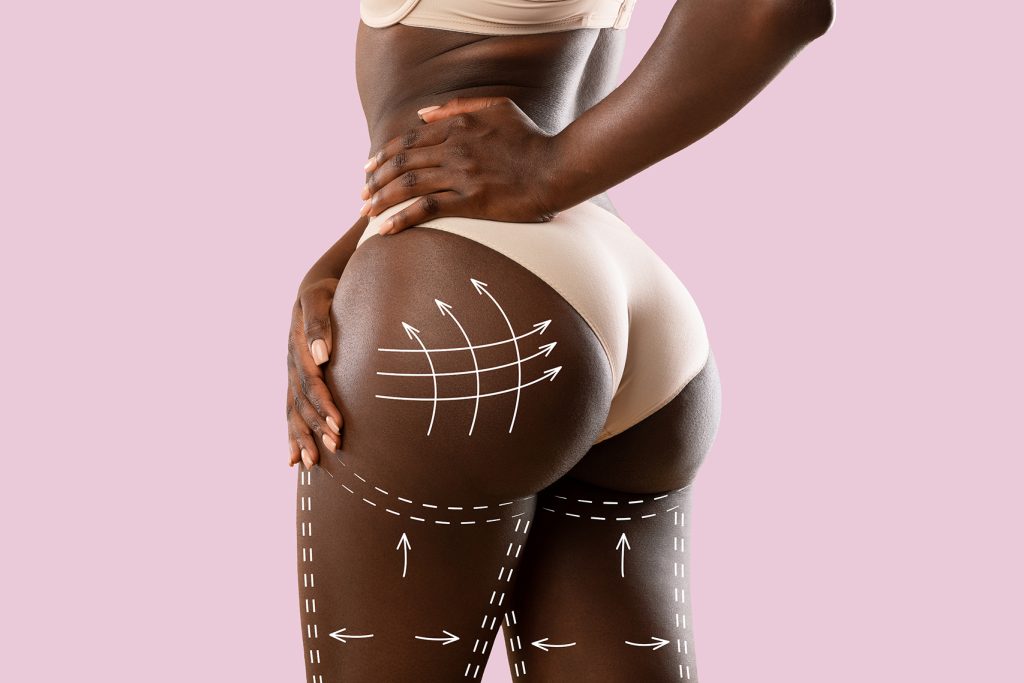
A Brazilian Butt Lift is actually two procedures in one: liposuction and fat transfer. First, fat is harvested from donor areas — typically the abdomen, flanks (love handles), back, and sometimes thighs or arms. This fat is then processed to separate viable fat cells from blood, oil, and damaged tissue. Finally, the purified fat is strategically injected into the buttocks to create volume, shape, and lift.
The appeal of a BBL over implants is that it uses your own tissue, creates a more natural look and feel, and simultaneously slims the areas where fat is harvested. You’re essentially redistributing your body’s fat to create better proportions.
However, the BBL is also one of the most technically demanding cosmetic procedures, and it carries risks that other surgeries don’t. The injection phase is particularly critical — where and how deep the fat is placed determines both the aesthetic result and the safety of the procedure.
BBL Costs: Dominican Republic vs. United States
Let’s talk money. In the United States, a BBL typically costs between $8,000 and $15,000 for the surgical fees alone. In major cities like Miami, Los Angeles, or New York, prices often exceed $12,000.
In the Dominican Republic, BBL prices typically range from $4,500 to $6,500. That’s a savings of 40-60% compared to US prices.
But surgical fees aren’t your only cost. For a complete picture, you need to budget for several additional expenses. Flights to Santo Domingo typically run $300-600 roundtrip from most US cities. Recovery house accommodations cost $100-250 per night for 14-21 nights, totaling $1,400-5,250. Pre-operative evaluations including cardiac, pulmonary, and blood work cost $200-400. Lymphatic massage sessions, typically 8-10 at $40-60 each, add $320-600. Personal expenses for meals, tips, and incidentals add another $300-500.
Adding it all up, a BBL in the Dominican Republic with full recovery support typically costs $7,000-13,000 total. That’s still significantly less than US prices, and often includes better post-operative support than you’d receive at home.
One important warning: be skeptical of prices that seem too good to be true. If a surgeon is advertising BBLs for $2,500 or $3,000, ask yourself what they’re cutting to hit that price point. Usually it’s safety measures, qualified staff, accredited facilities, or proper follow-up care. The money you ‘save’ isn’t worth the risk.
Understanding BBL Safety
Let’s be direct: the BBL has a higher mortality rate than most cosmetic procedures. This isn’t meant to scare you — it’s meant to ensure you take the risks seriously.
The primary danger is fat embolism. If fat is injected into or below the gluteal muscle, it can enter large blood vessels and travel to the lungs or heart, causing sudden death. This can happen on the operating table or hours later during recovery.
Here’s the critical point: fat embolism risk is almost entirely technique-dependent. Surgeons who inject fat superficially, into the subcutaneous tissue above the muscle, have dramatically lower complication rates than those who inject deeply into the muscle.
The challenge is that deep injection can create more dramatic immediate volume — bigger, rounder results right away. So some surgeons use dangerous techniques because patients request maximum volume. This is a case where ‘giving the patient what they want’ can be fatal.
A safe BBL surgeon will inject fat superficially and will be honest with you if your goals require more fat than can be safely transferred in one session. They may recommend a staged approach with a second procedure 6-12 months later rather than pushing limits in a single surgery.
Beyond fat embolism, other BBL risks include infection, asymmetry, fat necrosis (death of transferred fat cells), seroma (fluid accumulation), and contour irregularities. These complications are usually manageable when caught early, which is why proper post-operative care and follow-up are so important.
Are You a Good Candidate?
Not everyone is a good candidate for a BBL. Here’s what makes someone more or less suitable for this procedure.
Good candidates typically have enough donor fat to transfer. You don’t need to be overweight, but very thin patients may not have sufficient fat for meaningful augmentation. A BMI between 23-30 is often ideal. Good candidates also have good skin elasticity so skin can adapt to new contours. They’re in good overall health without uncontrolled medical conditions like diabetes or heart disease, and are non-smokers or willing to quit well before and after surgery.
Factors that may make BBL riskier or less effective include very high BMI over 35, which increases surgical risk significantly. Having very little body fat limits what can be achieved. Poor skin elasticity affects how results will look. Certain medical conditions require additional evaluation. And unrealistic expectations about achievable results can lead to dissatisfaction.
A responsible surgeon will be honest during your consultation about whether you’re a good candidate and what results are realistically achievable for your body. If a surgeon tells every patient they’re perfect candidates, that’s a red flag.
What to Expect: The BBL Procedure
Understanding what happens during a BBL helps you prepare mentally and ask better questions during consultation.
Before surgery, you’ll have a consultation where the surgeon examines you, discusses your goals, and creates a surgical plan. You’ll complete pre-operative evaluations including cardiac and pulmonary clearance. The day before surgery or morning of, you’ll have final blood work and a body mapping session where the surgeon marks your body to plan the procedure.
During surgery, which typically lasts 3-5 hours, you’ll be under general anesthesia. The surgeon first performs liposuction on the agreed donor areas. The harvested fat is processed and purified. Then the surgeon carefully injects fat into the buttocks through small incisions. Multiple injection points at various depths create natural-looking, even distribution.
Immediately after surgery, you’ll wake up in recovery wearing compression garments. You’ll be moved to a recovery house or facility once stable. You’ll have drains to remove excess fluid. Expect significant swelling and discomfort initially.
BBL Recovery: What It’s Really Like
Recovery from a BBL is no joke. Anyone who tells you it’s easy is lying. Here’s an honest timeline of what to expect.
The first three days are the hardest. Pain is significant but manageable with prescribed medication. Swelling is dramatic — your buttocks will look much larger than your final result. You can’t sit directly on your buttocks or lie on your back. Walking is limited and difficult. You’ll need help with basic tasks like using the bathroom.
During days four through seven, pain decreases noticeably. You’ll start lymphatic drainage massages, which help reduce swelling and prevent fluid accumulation. You’ll be walking more, which is important for preventing blood clots. Still no direct sitting or lying on your back.
Week two brings significant improvement in comfort. Drains are typically removed around day 10-12. You can use a BBL pillow for limited sitting. Swelling is still present but reducing.
Weeks three and four see most patients feeling much more normal. You can return to desk work with a BBL pillow. Light activities are fine. International patients are typically cleared to fly home. Swelling continues to decrease gradually.
During weeks six through eight, you can begin light exercise. Sitting restrictions ease. You may start weaning off the compression garment. Your shape is starting to show through the remaining swelling.
Months three through six bring final results emerging. About 60-80% of transferred fat survives long-term. Residual swelling fully resolves. You can return to all normal activities including full exercise.
How Much Fat Survives?
One of the most common BBL questions is about fat survival. Not all transferred fat survives — some will be reabsorbed by your body. Typically, 60-80% of transferred fat survives long-term, meaning your final results will be somewhat smaller than your immediate post-op appearance.
Several factors affect fat survival. Surgeon technique in harvesting and injecting plays a major role. Post-operative care including wearing your compression garment and avoiding pressure on your buttocks is critical. Nutrition especially protein intake during healing affects outcomes. Avoiding smoking is essential since it dramatically reduces fat survival. And maintaining a stable weight helps preserve results.
This is why your buttocks look enormous right after surgery and then ‘shrink’ over the following months — you’re seeing the combination of swelling resolving and non-surviving fat being reabsorbed. Your final result at 6 months is what you’ll keep long-term, assuming you maintain a stable weight.
Choosing a Safe BBL Surgeon
Given the risks specific to BBLs, surgeon selection is even more critical than for other procedures. Here’s what to look for.
Verify their credentials first. They should be SODOCIPRE certified, which you can check yourself at sodocipre.net. Don’t take their word for it — verify directly.
Ask about their technique. Specifically ask whether they inject fat into the muscle or only into the subcutaneous tissue. A safe surgeon will clearly explain that they inject superficially, above the muscle. If they’re vague about this or seem annoyed by the question, that’s concerning.
Understand their limits. A safe surgeon will have clear policies on maximum fat transfer volume, BMI limits for surgery, and combination procedures. They should be willing to decline patients or stage procedures rather than push limits.
Review their results carefully. Look at before and after photos, but look critically. Are results consistently natural-looking, or do some patients have obviously unnatural or exaggerated proportions? Consistency in results suggests consistent technique.
Evaluate their facility. Where do they operate? Is it an accredited surgical center with proper equipment and emergency capabilities? Surgery in makeshift facilities is never acceptable.
Conclusion
A BBL in the Dominican Republic can be a safe, positive experience that gives you the body confidence you’re looking for. It can also be dangerous if you choose the wrong surgeon.
The difference is entirely within your control. Do your research. Verify credentials. Ask hard questions about technique and safety. Don’t let price be your primary decision factor. Trust your instincts if something feels off.
Your body deserves a surgeon who prioritizes your safety as much as your results. They exist here in the DR — you just need to find them.